Dense Prediction with Semantic Segmentation
Semantic Segmentation is a method of separating a digital image into many portions of various pixels used in advanced picture processing and PC vision. The segmentation's goal is to rearrange and transform a picture's portrayal into something more meaningful and easier to study. It's widely used to locate objects and boundaries in photographs.
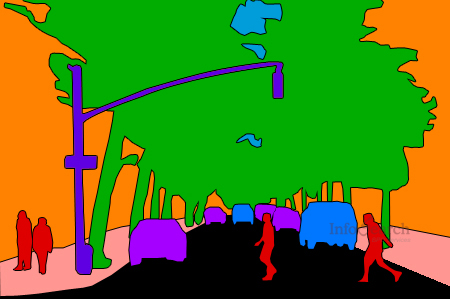
The goal of semantic picture division is to associate each pixel of a picture with a corresponding class of what is being addressed. This task is referred to as a thick forecast, because we are anticipating each pixel in the image. Vehicles and mechanical technology make extensive use of the semantic segmentation. Semantic division is not limited to cars, self-sufficient flying objects or mechanical technology; it also provides precise data to clinical conclusions via semantic division of clinical images.
How Semantic Image Segmentation Works For AI?
With the pixel-wise distribution, semantic segmentation will assist the AI-based insight model in grouping and distinguishing the objects of interest. Semantic segmentation explains how to rank, limit, recognize, and section different types of items in a picture by assigning them to a single class. With consistent image division administrations, semantic segmentation is a pioneer which is transforming the business.
Semantic segmentation helps you turn your unannotated data, be it an image, a video, or a 3D shape, into explained ones. Segmentation will make different items visible by using occurrence division and computer vision to limit the article. It can visualise various types of items in a single class as a single element, assisting insight with displaying to benefit from such division and separate the articles visible in specific environmental factors.
3D Image Segmentation
Your candid photos become labeled-on photos with jumping boxes around objects of interest with the AI Segmentation Solution. The continuous 3D marking utility is what allows the image segmentation arrangement to enable an ever-increasing number of names for 3D naming.
Semantic Segmentation For Autonomous Industry
Driverless cars that work on a computer vision can learn better scenarios by using more exact pixels to sense different types of objects on the roadway. While constructing a self-driving vehicle, we provide the necessary data to ensure that it can move safely while avoiding a variety of objects in its path.
Object Detection for Complex Images
The semantic segmentation takes item recognition a step further to enable denser discovery for computer vision. By creating covers for each individual item in the photo, segmentation aids in recognizing objects within a described class. It's similar to semantic, except it goes a little deeper and recognizes every pixel the article is associated with. Semantic segmentation also provides sensor-friendly results, regardless of the type. You can send us data from any type of sensor, and we'll turn it into a complete 3D scene.